|
 CUSCO
GENERAL INFORMATION CUSCO
GENERAL INFORMATION
Located in the south-eastern part of the Andes, Cuzco is Peru's main
tourist destination and one of the most important in the Americas. Known
by the Incas as the "home of gods", Cuzco became the capital of one of
the largest pre-Columbian empires: the Tawantinsuyo. Its name in
Quechua, Qosqo means "Navel of the world", which derives from when the
city served as a hub for a vast network of roads interconnecting
virtually the whole of South America, from the southern part of present-day
Colombia to the northern part of what is now Argentina.Furthermore,
Cuzco is also both a mestizo and colonial city, with splendid churches
and manors built on foundations of elaborately carved stone. The local
cuisine is also something for the traveler to look forward to, including
superb combinations of typical Andean foods, such as corn, potatoes and
chilli pepper, with pork and mutton introduced by the Spanish. With its
vast landscapes, rich history and fascinating geography, Cuzco is,
without a doubt, something all travelers long to experienceSome
important sites to visit in town center and surroundings of the city:
Sacsayhuaman, Cusco
The ruin complex of this military fortress is a superb example of
Inca architectural skills since it was made of enormous carved limestone
boulders (some weighing more than 300 tons each) that were fit together
perfectly without the use of mortar.Attraction type: Ancient ruins;
Historic site Kenko and
Puca PucaraKenko
is a ritual site built on a sole outcrop of limestone, with underground
galleries and a semicircular amphitheatre. Puca Pucara (in Quechua, "red
fortress"), was a military installation made up of stairways, terraces
and large walls which once formed part of the capital's defence system.
Both structures are part of the archaeological circuit near the city of
Cuzco.
Plaza de Armas (Huacaypata),
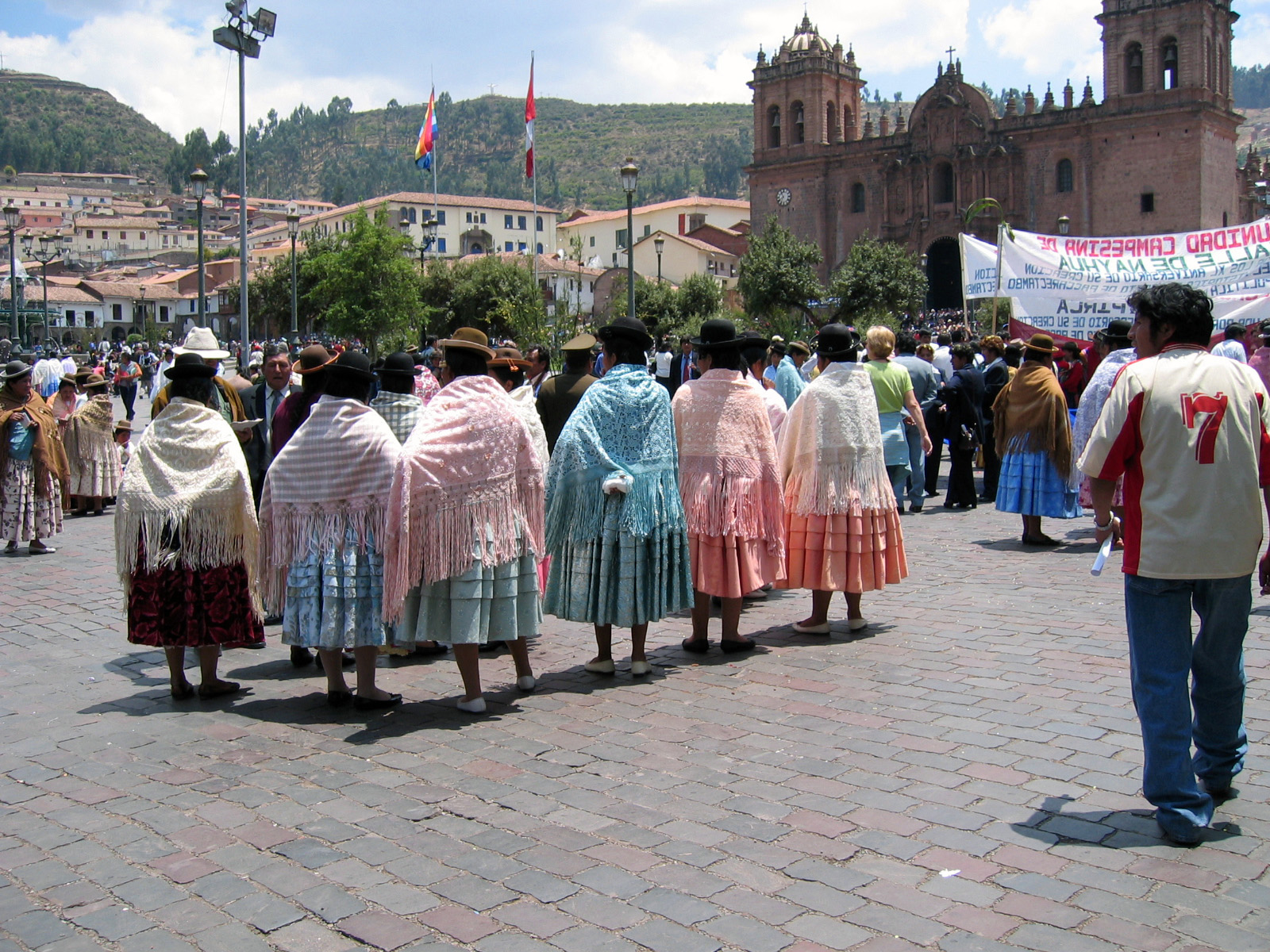
Cusco Dominated by the magnificent Cathedral, this graceful square
is considered the heart of Cusco and is characterized by covered
walkways, colonial arcades and houses containing numerous shops,
restaurants and travel agencies.Attraction type: Town center/square/plaza
Cusco Cathedral,
Cusco Dominating the northeast side of the Plaza de Armas, this
magnificent renaissance-style, 16th-century building is in the shape of
a Latin cross and contains nearly 400 colonial paintings including the
Last Supper by Marcos Zapata.Attraction type: Architectural building;
Religious site
Temple of the Sun (Coricancha),
Cusco This ruin was once the most important temple of the Incas,
which was later used as a base for the Church of Santo Domingo when the
Spanish conquered the city.Attraction type: Historic site; Ancient ruins
Plazoleta de San Blas,
Cusco This small square features a modest adobe church that contains
the pulpit of San Blas, a carved 17th-century wooden pulpit adorned by
the figure of Christ triumphant.Attraction type: Town center/square/plaza
TiponThis picturesque set of terraces, long stairways and stone canals
is located 20 km south of the city. Evidence suggests that
Tipon
was part of a royal hacienda belonging to Inca Yahuar Huaca, as well as
a place of worship and agricultural research. An outstanding is the
sense of harmony in the channeling of water via stone structures
including aqueducts (some of which are underground), waterfalls and
gullies, indicating the Incas' knowledge of hydraulics. |