|
General
Information |
|
|
|
|
|
|
|
|
|
|
|
|
|
|
|
Tip's |
|
|
|
|
|
|
|
Archeological
Sites |
|
|
|
|
|
|
|
|
|
|
|
|
|
Museums and
Traditions |
|
|
|
|
|
|
|
|
|
|
|
|
|
Churches |
|
|
|
|
|
|
|
|
|
|
|
|
|
|
|
Others
Interesting |
|
|
|
|
|
|
|
|
|
|
|
|
|
|
|
|
| |
| |
| |
| |
| |
| |
| |
| |
| |
| |
| |
| |
| |
| |
| |
| |
| |
| |
|
|
|
|

|
| |
|
TRADITIONAL DRESS |
| |
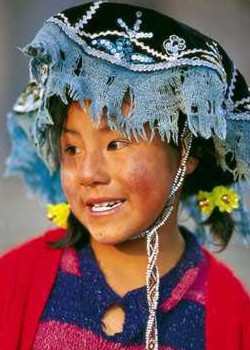 The traditional dress The traditional dress
worn by Quechua women today is a mixture of styles from Pre-Spanish
days and Spanish Colonial peasant dress.
Lliclla -
a small rectangular hand-woven shoulder cloth fastened at the front
using a tupu, a decorated pin. However it is more common nowadays to
see a large safety pin being used.
K'eperina -
a larger rectangular carrying cloth worn over the back and knotted
in front. Children and goods are securely held inside.
Polleras -
colourful skirts made from hand-woven wool cloth called bayeta.
Women may wear 3 or 4 skirts in a graduated layer effect. On special
occasions such as festivals women may wear up to 15 polleras tied
around the waist. Often the trim of each skirt is lined with a
colourful puyto which is usually handmade. In some areas polleras
are also referred to as milkmaid (Quechua)
Monteras -
hats vary tremendously throughout the communities in the Andes.
Often it is possible to identify the village from which a women
comes from just by the type of hat she wears. Hats are secured with
delicately woven sanq'apa straps adorned with white beads.
Unkuña -
a small rectangular cloth which is used for carrying snacks such as
corn or coca.
Ojotas -
sandals made from recycled truck tires.The photo above is typical of
women's traditional dress in the Ausangate region. Under their
shoulder cloths the women wear wool jackets called a juyuna with
front panels decorated with white buttons. They are elaborately
adorned and commonly turned inside out for everyday use. Under the
juyuna women wear a tight-fitting synthetic sweater usually in
brilliant shades of yellow, pink and green.
Men's Traditional Dress
Younger Quechua men generally wear Western-style clothing, the most
popular being synthetic football shirts and tracksuit pants. Older
men still wear dark wool knee-length hand-woven bayeta pants. A
woven belt called a chumpi is also worn which provides protection to
the lower back when working in the fields. Mens' fine dress includes
a woollen waistcoat, similar to a sleeveless juyuna as worn by the
women but referred to as a chaleco. Chalecos can be richly
decorated.The most distinctive part of men's clothing is the hand-woven
poncho. Nearly every Quechua man and boy has a poncho, generally red
in colour decorated with intricate designs. Each district has a
distinctive pattern. In some communities such as Huilloc, Patacancha,
and many villages in the Lares Valley ponchos are worn as daily
attire. However most men use their ponchos on special occasions such
as festivals, village meetings, weddings etc.
As with the women, Ojotas, sandals made from recycled tyres, are the
standard footwear. They are cheap and durable.
Chullos are frequently worn.
These are knitted hats with earflaps. The first chullo that a child
receives is traditionally knitted by his father. In the Ausangate
region chullos are often ornately adorned with white beads and large
tassels called t'ikas. Men sometimes wear a felt hat called a
sombrero over the top of the chullo decorated with centillo, finely
decorated hat bands.Since ancient time's men have worn small woven
pouches called chuspas used to carry their coca leaves.
|
| |
| |
| |
|